
Last week, a group of the o1Labs team headed to EthConf in New York. We sponsored a booth at the Expo, met with builders and investors from across the ecosystem, and Deepthi delivered a presentation called Proof over Promises.
One theme came through consistently across conversations, presentations, and demos: the conversation around zero knowledge technology is evolving.
The first era of zk was privacy. The second was scaling. Increasingly, people are exploring how zk can be used to create stronger guarantees around security, compliance, and verifiability. That's a shift we've been thinking about a lot at o1Labs, and it was interesting to see similar ideas emerging across the conference.
But before we get into that, a quick note on New York.
June might be the best time of year to visit. The weather was perfect, the city was buzzing, and it probably didn't hurt that the Knicks were in the middle of a playoff run. Even as someone who doesn't follow sports closely, it was hard not to get caught up in the excitement. A team that's spent decades trying to get back to the top, refusing to quit when things look bleak? There's probably a crypto analogy in there somewhere.
The conference itself had a noticeably different feel than events from previous cycles. Gone were the flashy parties, celebrity appearances, and over-the-top displays of wealth. The mood was more grounded.
That doesn't mean people were pessimistic. Quite the opposite.
The prevailing sentiment was that while retail excitement may be subdued, institutions are showing increasing interest in crypto infrastructure and digital assets. Many attendees felt that some of the most durable companies in this industry are being built right now, during a period when teams are focused less on speculation and more on solving real problems.
One of the highlights of our week was Deepthi's talk, Proof over Promises, where she introduced a framework we've been exploring internally that we've been calling "ZK-Gated Execution" (note, this is a placeholder name).
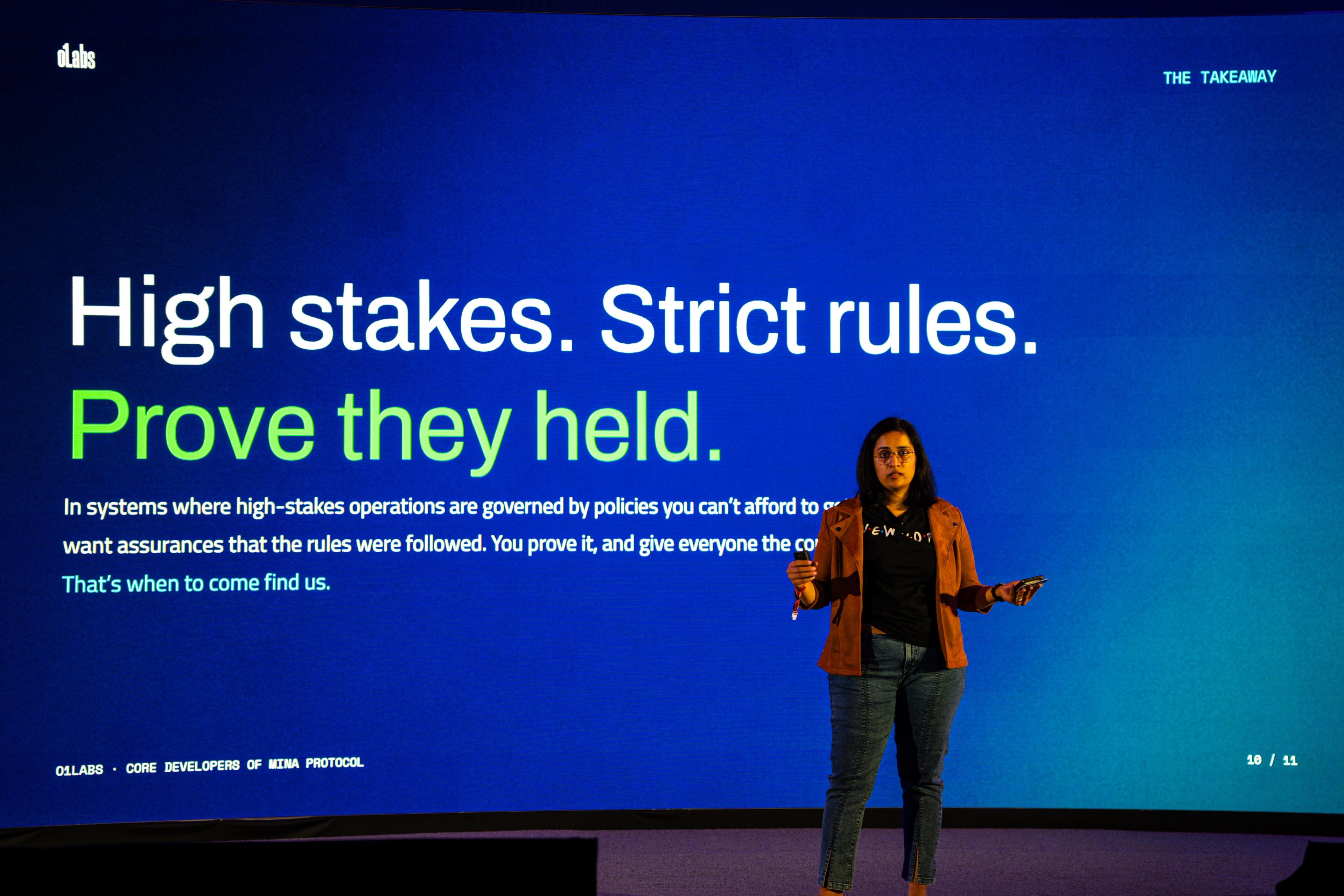
The core idea is simple: high-stakes actions should require cryptographic proof that the required checks, policies, or approvals were actually satisfied before the action can occur.
In the framework, business rules can be encoded into zk circuits that generate proofs of compliance. Those proofs can then be combined and verified before an operation proceeds. Rather than trusting that policies were followed, systems can require proof that they were.
At EthConf, we demonstrated several examples of this idea in practice, including proof-of-personhood, verifiable workflows, and agentic workflows.
What surprised me most was how often conversations about AI and conversations about zero knowledge converged.
Across the conference, teams were exploring questions such as:
- How do you put guardrails around autonomous agents?
- How do you prove an agent was authorized to take a particular action?
- How do you create verifiable audit trails for increasingly complex systems that involve humans and agents?
- How do you ensure policies are enforced rather than merely documented?
These are infrastructure questions, and they're becoming more important as AI systems become more capable.
We also noticed that other teams were beginning to talk about zk in terms of security and verifiability, not just privacy or blockchain scaling. That doesn't mean the industry has reached a consensus, but it does suggest that a new category of use cases is beginning to emerge.
There were plenty of other interesting discussions throughout the week. On the technical side, talks around proving performance, formal verification, and software security drew significant attention. On the business side, speakers discussed how crypto infrastructure is increasingly being viewed as financial plumbing rather than a standalone industry. Several participants predicted that future startups will use crypto rails under the hood without necessarily marketing themselves as crypto companies.
Taken together, these conversations reinforced something we've been thinking about for a while: cryptography is gradually becoming core infrastructure.
Users may never know which proof system secures a workflow, which blockchain settles a transaction, or which cryptographic primitive verifies a permission. What they'll care about is whether systems are secure, trustworthy, and able to prove they did what they claimed to do.
That's the direction we're exploring through our work on ZK-Gated Execution, and after a week of conversations at EthConf, I'm more convinced than ever that it's a problem worth solving.
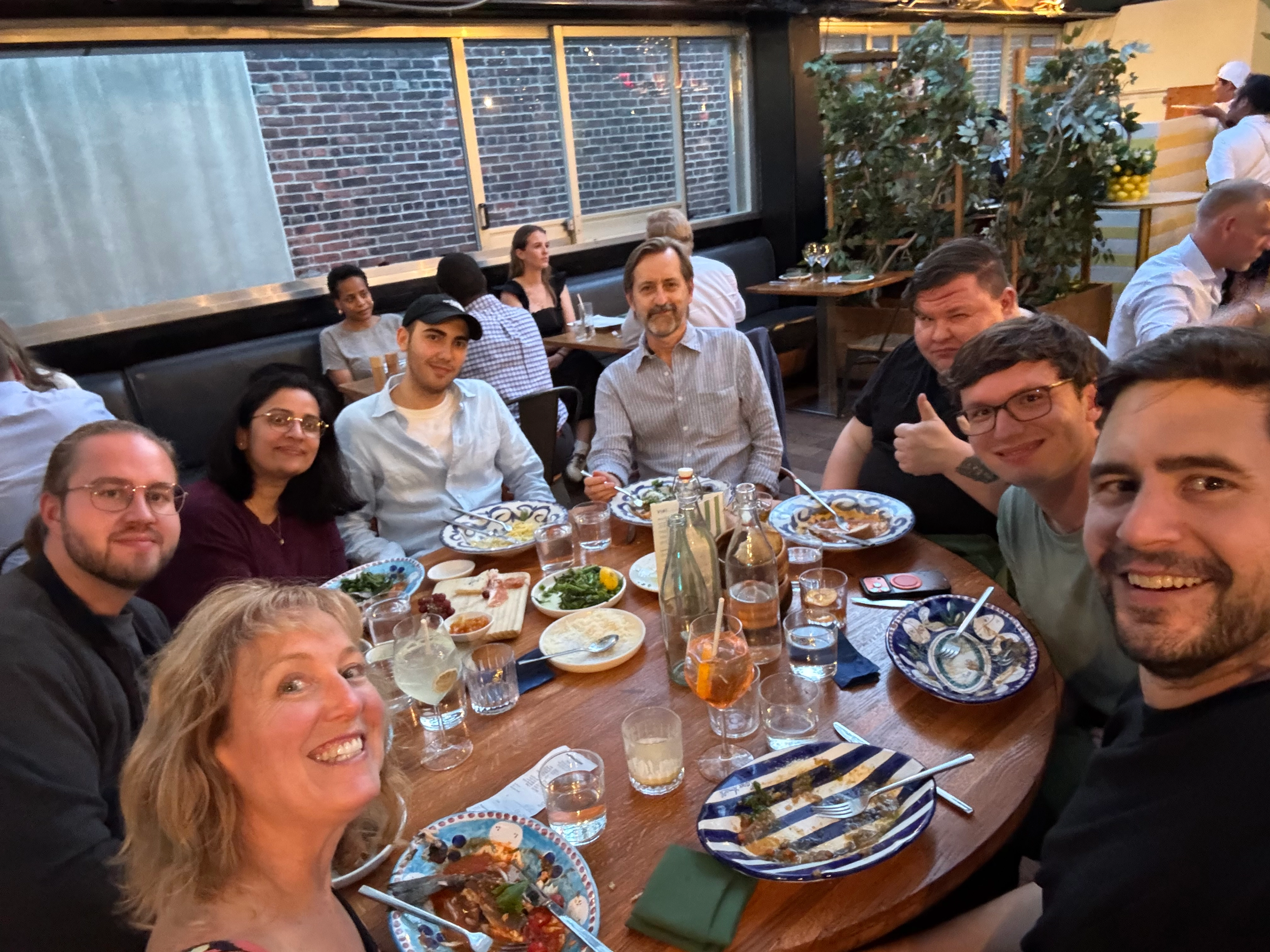
Thank you to everyone who stopped by the booth, attended Deepthi's talk, shared feedback on our demos, or spent time discussing ideas with our team. And thank you to everyone at o1Labs who helped build the demos, prepare for the event, and make the week a success.